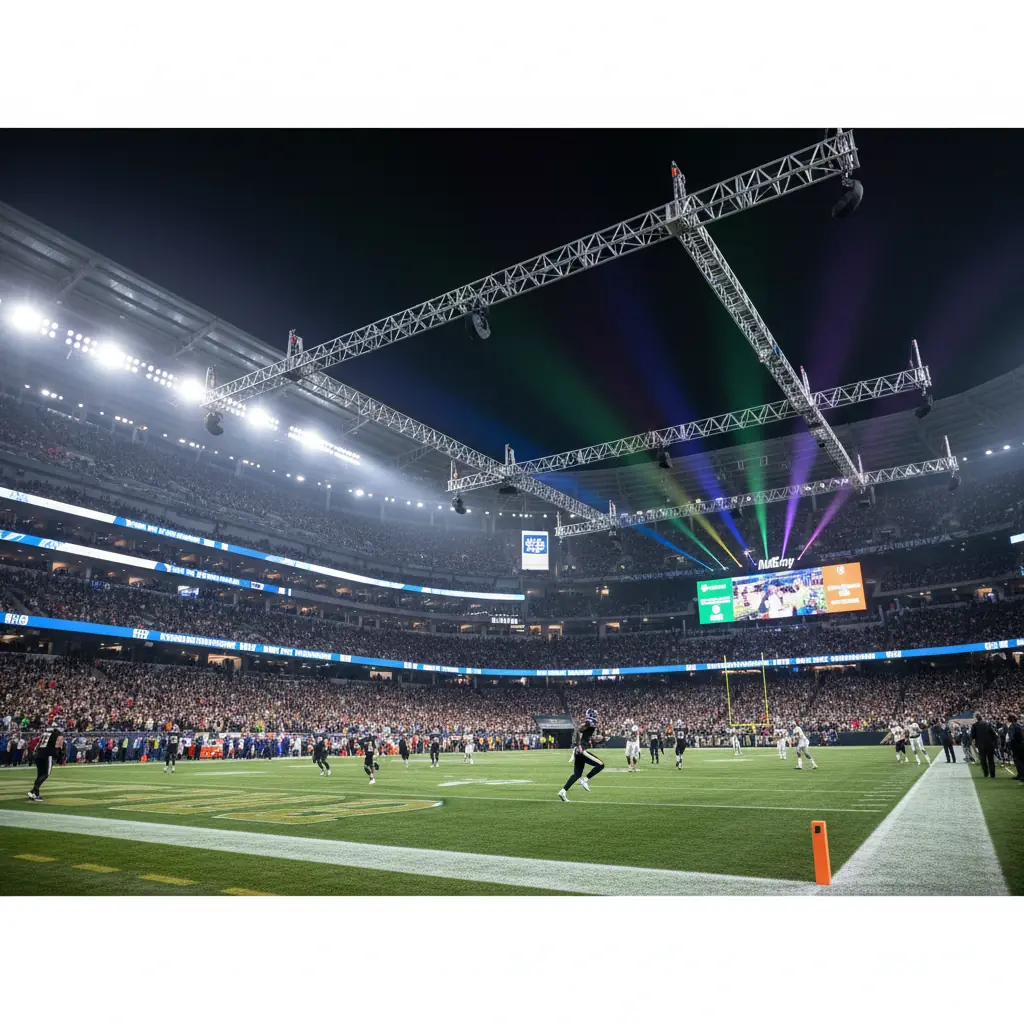
Remember that impossible catch under the lights during the Thursday Night Football game? The roar of the crowd, the glint off the helmet, the ball seemingly suspended in mid-air – moments like these are etched in our memories, and they wouldn’t be possible without the unsung heroes of the stadium: the lights.
As someone who’s spent years immersed in the world of sports and entertainment technology, particularly stadium infrastructure, I’ve witnessed firsthand how vital the illumination is for NFL Thursday Night Football. It’s not just about seeing the game; it’s about safety for the players, the excitement for the fans in the stands and at home, and the quality of the broadcast that brings the action to millions of viewers.
From the early days of basic floodlights to the advanced LED systems we see today, the evolution of stadium lighting has transformed the way we experience these games. We delve into the crucial role these lights play in every snap, tackle, and touchdown of Thursday Night Football.
The Evolution of Stadium Lighting
Early Lighting Solutions and Their Limitations
The earliest attempts at stadium lighting were rudimentary, often relying on technologies repurposed from other applications. Carbon arc lamps, while powerful, were notoriously unstable and required constant maintenance. Incandescent bulbs, though more manageable, suffered from low light output and excessive energy consumption. These early solutions provided inadequate illumination for both players and spectators. Their short lifespans and poor light quality resulted in frequent replacements and high operational costs. The heat generated by these systems also presented a significant challenge, particularly in enclosed stadiums.
The Rise of Metal Halide
Metal halide lamps represented a significant leap forward in stadium lighting technology. They offered substantially higher light output compared to incandescent bulbs while consuming less energy. This made them a more cost-effective solution for illuminating large areas. However, metal halide systems were not without their drawbacks. They required long warm-up times, sometimes 15-20 minutes, before reaching full brightness. This delay could be problematic during events with unexpected power outages or sudden changes in lighting needs. Additionally, metal halide lamps required regular maintenance and had a tendency to flicker or change color over time.
The transition from early lighting to metal halide was like trading a horse-drawn carriage for a Model T. It got us there faster, but it still had its quirks. Now, LED, that’s like warp speed.
The Technical Aspects of NFL Lighting
Understanding Key Lighting Metrics
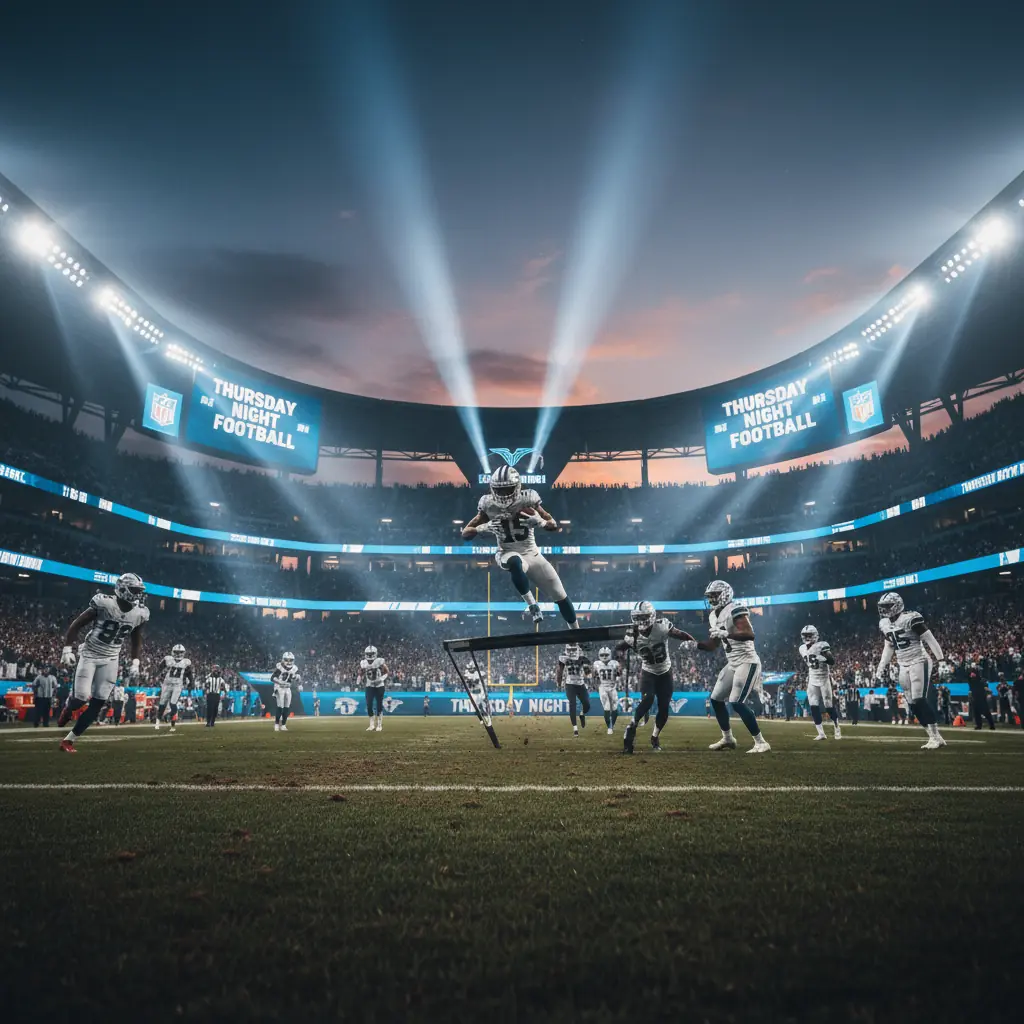
NFL stadiums demand more than just bright lights; they require precision illumination measured by specific metrics. Foot-candles quantify light intensity – the amount of light falling on a surface. A higher foot-candle level means a brighter field. Uniformity ratio assesses how evenly light is distributed. A poor uniformity ratio results in dark spots and shadows, hindering player visibility and impacting the viewing experience. Glare, another critical factor, refers to excessive brightness that causes discomfort or impairs vision. Controlled glare enhances player safety and spectator comfort. Properly balancing these metrics ensures optimal lighting quality.
Meeting Broadcast Standards
Modern NFL lighting isn’t just for the fans in the stands; it’s crucial for television broadcasts. Color Rendering Index (CRI) measures how accurately a light source renders colors. A high CRI ensures true-to-life color representation, vital for viewers. Flicker-free lighting is another must-have. Older lighting technologies can produce flickering, which is imperceptible to the human eye but creates strobing effects on camera. Newer LED systems offer flicker-free operation, providing smooth, clear broadcast images. Today’s systems can provide precise, real-time data on these metrics, enabling broadcast teams to fine-tune their cameras for the best possible picture.
NFL lighting standards are stringent, requiring a delicate balance of light intensity, uniformity, and glare control. Stadiums strive to meet specific foot-candle levels, ensuring players can track the ball accurately and fans can see the action clearly. These standards are also vital for high-definition television broadcasts. Broadcasters need consistent color rendering and flicker-free operation to deliver the best possible viewing experience. Compliance with these standards is overseen by stadium managers, who perform regular light meter test and system maintenance. One challenge we faced during a recent stadium upgrade involved upgrading the lighting system while minimizing disruptions to scheduled events. By phasing the installation and working closely with the stadium’s operations team, we successfully met the lighting requirements without impacting the game schedule.
Enhancing the Fan Experience with Lighting
Stadium lighting isn’t just about illuminating the field; it’s a powerful tool for crafting a memorable and immersive fan experience, both for those in the stands and viewers at home. Modern lighting technology transforms a sporting event into a spectacle, amplifying excitement and fostering a deeper connection between fans and the game. The strategic use of lighting contributes significantly to stadium atmosphere, impacting everything from pre-game excitement to post-game celebrations, while of course, assuring safety throughout the entire field and stadium.
Creating Dynamic Light Shows
Color-changing LED lights are the backbone of dynamic stadium light shows. Programmable and energy-efficient, these lights are capable of producing a stunning array of colors and effects. These light shows involve sophisticated software and hardware working in tandem to create captivating visual displays. These displays are often synchronized with music and other sound effects to heighten the spectacle around the whole stadium. These light shows could be implemented before a game to engage the fans and get them hyped, between rounds and after the game, after a victory.
Interactive Lighting and Fan Engagement
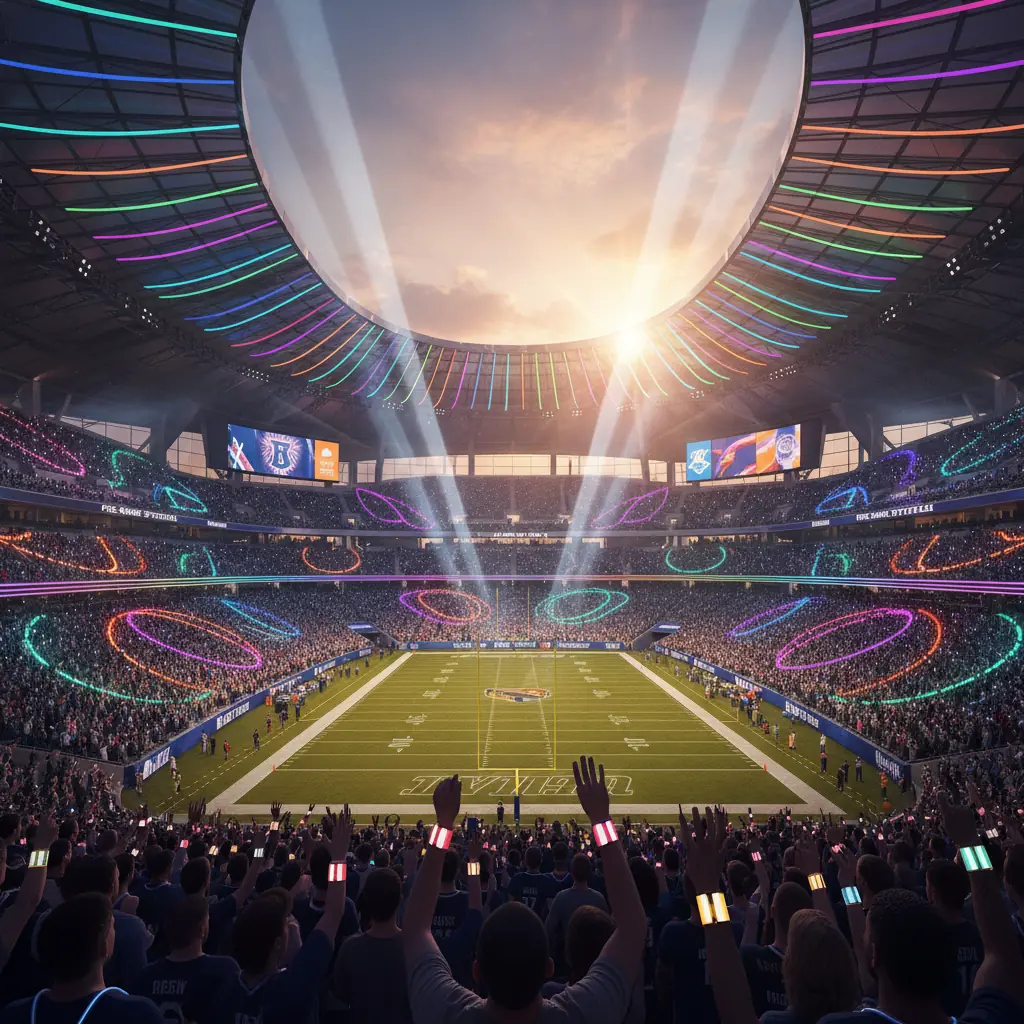
Interactive lighting systems take fan engagement to the next level. By using technologies like Pixmob, each fan becomes part of the light show. For example, Pixmob uses LED wristbands or other devices that can be remotely controlled to display synchronized patterns and colors. This creates a sense of unity and shared experience within the stadium. Other stadiums are embracing similar technologies to create interactive experiences. These displays could be simple but effective to keep the public envolved. This makes the show more interesting not only for the attendents but also for outside viewers.
The Future of Football Stadium Lighting
The roar of the crowd, the thrill of the game – these unforgettable moments under the bright lights are what make football stadiums iconic. But behind the spectacle, a revolution is brewing in stadium lighting technology. The future of stadium lighting is not just about brightness; it’s about energy efficiency, sustainability, and creating immersive experiences that redefine the fan experience. We’re moving beyond simple on/off switches toward intelligent systems that respond to the environment and enhance the game.
The driving force is, undoubtedly, a growing awareness of environmental impact. Stadiums, with their massive energy demands, are under increasing pressure to adopt sustainable practices. This is fueling innovation in areas like LED technology, smart controls, and even exploring renewable energy sources to power these massive entertainment venues.
Imagine a stadium where the lights automatically adjust based on daylight, weather conditions, and even the specific action on the field. Picture AI algorithms analyzing crowd density and optimizing lighting to enhance the atmosphere while minimizing energy waste. The possibilities are vast, and the technology is rapidly catching up with the vision.
Furthermore, the evolution of lighting extends beyond mere illumination. OLED lighting, with its flexibility and superior color rendering, holds immense potential for creating dynamic visual displays within the stadium. From pulsating light shows synchronized with music to displaying team colors and logos, the stadium itself becomes a canvas for immersive entertainment.
The future of stadium lighting is a fusion of technology and sustainability. It’s about creating a balance between a heightened fan experience and a reduced environmental footprint. It’s a future where stadiums are not just places to watch football, but showcases of innovation and responsible energy consumption.
Smart and Adaptive Lighting Systems
Smart and adaptive lighting systems are revolutionizing stadium operations. By incorporating sensors and intelligent controls, these systems dynamically adjust light levels based on real-time conditions, optimizing energy consumption. Investing in LED technology as the backbone of these systems provides immediate returns through reduced energy bills and lower maintenance costs. Furthermore, integrating these systems with existing building management platforms provides a centralized control point, improving efficiency and enabling predictive maintenance, ensuring optimal performance and long-term value.
Sustainability and Energy Efficiency
Sustainability in stadium lighting is achieved primarily through the adoption of LED technology, which drastically reduces energy consumption compared to traditional lighting solutions. Further enhancing sustainability involves implementing adaptive lighting controls that respond to ambient light levels and occupancy, minimizing unnecessary usage. Investing in renewable energy sources, such as solar panels, to power the lighting infrastructure provides a comprehensive approach to environmental responsibility. This combination of efficient technology and intelligent control systems not only reduces the stadium’s carbon footprint but also offers long-term cost savings.
Conclusion
Modern NFL stadium lighting represents far more than just illumination; it embodies a commitment to safety, an elevated fan experience, unparalleled broadcast quality, and remarkable energy efficiency. The transition from rudimentary lighting systems to the sophisticated LED technology gracing today’s stadiums mirrors the relentless pursuit of excellence that defines the NFL itself.
We journeyed from the early days of basic visibility to the current era of dynamic lighting that enhances every aspect of the game. The stringent technical requirements, demanding precise control over light levels, color temperature, and flicker, ensure optimal conditions for players, spectators, and broadcasters alike. This commitment to quality directly translates into a richer, more immersive experience for fans, both in the stadium and at home.
The future of NFL stadium lighting promises even greater advancements, with innovations like intelligent lighting systems, personalized lighting experiences, and enhanced sustainability initiatives on the horizon. These developments will further solidify the role of lighting as a crucial element in shaping the future of professional football.
As someone deeply immersed in the world of sports lighting, witnessing this evolution has been truly inspiring. The impact of well-designed lighting extends far beyond mere visibility; it shapes the atmosphere, amplifies the excitement, and ultimately, elevates the entire sporting experience. So, the next time you’re captivated by a game under the lights, take a moment to appreciate the intricate engineering and artistry that makes it all possible. And if you seek to illuminate your understanding further, remember that expert insights are always available to brighten your path.